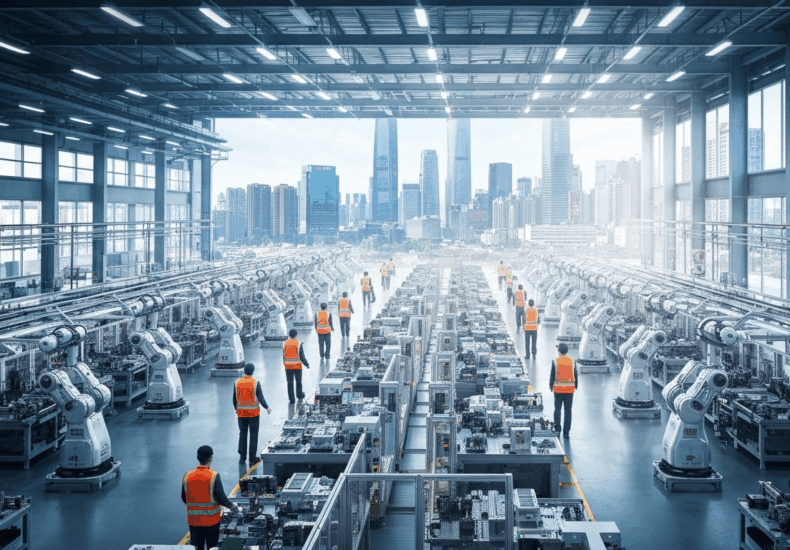
China Industrial Robot Stock Exceeds 2 Million in 2024
Key Highlights
Here are the key takeaways from the latest report on industrial automation:
- China’s operational stock of industrial robots surpassed the 2 million mark in 2024.
- The country set a new record with 295,000 annual installations in 2024, making it the world’s largest market.
- These new robot installations give China a massive 54% share of all global deployments.
- For the first time, Chinese manufacturers captured a majority domestic market share of 57%.
- Globally, the total number of industrial robots in operational use grew to 4.664 million units.
Introduction
The world of manufacturing is undergoing a dramatic transformation, and China is at the forefront of this change. According to the new World Robotics 2025 report from the International Federation of Robotics, China’s fleet of industrial robots in operational use has now exceeded 2 million. This incredible milestone isn’t just a number; it represents a fundamental shift in how goods are produced, cementing the nation’s status as a powerhouse in global automation. Are you wondering what this means for the future of manufacturing?
China’s Path to Becoming a Global Leader in Industrial Robotics
China’s journey to becoming a global leader in industrial robotics has been nothing short of explosive. The country now accounts for more than half of all new robot installations worldwide, a testament to its aggressive push toward automation. This strategy has not only boosted its production capabilities but has also reshaped its internal market.
A key factor in this success is the rising dominance of local companies, which have significantly increased their domestic market share. This growth points to a mature and self-sustaining robotics ecosystem. The following sections will explore the specific drivers and policies that fueled this remarkable ascent.
Factors Driving Rapid Robot Adoption in China
Why has the adoption of industrial robots in China seen such a huge surge? A primary reason is the strong demand created by the widespread transition to digital and automated manufacturing. As industries modernize, the need for efficient, high-precision robotic solutions has skyrocketed, leading to a record year for installations.
This intense robot demand is fueled by several key factors that have created a perfect environment for rapid growth. These include:
- The ongoing digitization of countless industries.
- A strategic push to maintain and enhance manufacturing competitiveness on a global scale.
- Significant untapped potential for further automation across various sectors.
This combination of factors explains why China’s industrial robot stock has soared past the 2 million mark. The country is not just installing robots; it’s building a foundation for future industrial dominance, with experts predicting an average growth of 10% each year until 2028.
Government Policies and Strategic Investments
The rapid expansion of China’s robotics landscape isn’t accidental; it’s the result of focused government policies and strategic investments. These initiatives have been instrumental in empowering Chinese manufacturers and robot system integrators, helping them compete with and even surpass foreign suppliers. The results, as highlighted in the latest World Robotics report, speak for themselves.
Over the last decade, these efforts have paid off handsomely. Consider these achievements:
- Domestic manufacturers’ market share climbed from about 28% to an impressive 57% in just ten years.
- This allowed local companies to sell more robots in their home country than foreign competitors for the first time ever.
This incredible growth trajectory shows how quickly China’s industrial robot stock has expanded. The country effectively doubled its operational robot count since 2021 alone, illustrating the sheer speed and scale of its automation strategy.
Annual Robot Installations and Milestones Achieved
China’s annual installations paint a vivid picture of its dominance in the global robot market. In 2024, the nation installed a record-breaking 295,000 new robots. This figure represents 54% of the market share of the annual total worldwide, meaning China installed more robots than the rest of the world combined.
While the aggregate global trajectory for robot installations remains positive, China’s contribution is a major driving force. This achievement raises important questions about the broader implications of such rapid automation. Let’s look at the significance of this milestone and its impact on the manufacturing landscape.
Surpassing 2 Million Robots: Significance in 2024
Reaching a total number of industrial robots over 2 million is a landmark achievement for China. This massive operational stock, the largest of any country, solidifies its position as the undisputed leader in industrial automation. It demonstrates a long-term commitment to modernizing its manufacturing base and boosting productivity on an unprecedented scale.
The impact of having 2 million robots in operational use is profound. It enhances production capacity, improves quality consistency, and allows Chinese factories to operate with greater efficiency and flexibility. This milestone is not just about quantity; it reflects a deep integration of automation into the nation’s economic fabric.
With the highest annual total of robot installations, China continues to widen the gap. This growing market share in global deployments signals that the country is not slowing down, ensuring its manufacturing sector remains competitive and technologically advanced for years to come.
The Impact of High Installation Rates on Manufacturing
The consistently high rate of industrial robot installations is fundamentally changing the face of Chinese manufacturing. These new deployments accelerate the transition of many industries from manual labor to fully automated processes. Have you considered what this means for factory output and quality?
For Chinese factories, the benefits of surpassing 2 million robots are numerous. Automation leads to higher throughput, reduced operational costs, and improved worker safety. Robots can perform repetitive and strenuous tasks 24/7 without fatigue, ensuring a level of consistency that is difficult to achieve with human labor alone.
This large-scale automation allows businesses to scale production quickly to meet fluctuating market demands. Ultimately, embracing robotics at this level gives Chinese manufacturing a significant competitive edge, driving innovation and efficiency across the board.
Key Industries Revolutionized by Industrial Robots in China
The growing operational use of industrial robots is not spread evenly; certain key sectors are leading the charge. The transition of many industries to automation has been accelerated by specialized robotic solutions developed by domestic robot system integrators. This innovation is not only transforming established sectors but also opening up entirely new markets.
As Chinese manufacturers continue to increase their domestic market share, their influence is expanding into both traditional and emerging fields. Let’s examine the primary industries that are being revolutionized by this automation boom.
Automotive, Electronics, and Logistics Sectors
In the world’s largest market for robotics, several key industries have become major adopters of automation. The impact of over 2 million robots is most visible in sectors that demand high volume, precision, and efficiency. Domestic robot system integrators are providing tailored robotic automation solutions to meet these needs.
The main industries driving this transformation include:
- The automotive industry: A traditional powerhouse of robotics, using them for everything from welding and painting to final assembly.
- Electronics: This sector relies on robots for the precise handling and assembly of small components, a task that is vital for quality control.
- Logistics: Automation is revolutionizing warehouses and distribution centers, where robots handle sorting, packing, and palletizing.
These sectors showcase how deeply integrated robotic solutions have become in China’s industrial core, fueling its manufacturing prowess and enabling it to produce goods at an immense scale.
Emerging Applications in New Markets
Beyond traditional manufacturing, robot installations are beginning to penetrate new markets, driven by advancements in technologies like artificial intelligence. Chinese manufacturers are not just focused on the present; they are pioneering applications that will define the future of work. This forward-thinking approach promises a continued high growth rate for the robotics industry.
What role does artificial intelligence play in this expansion? It allows robots to perform more complex tasks that require learning and decision-making. Emerging applications include:
- Advanced robotics in food production and packaging.
- Automation in pharmaceutical and life science laboratories.
- Innovative uses in construction and agriculture.
The development of experimental humanoid robots like Unitree’s R1, capable of complex movements, hints at a future where AI-powered robots move beyond the factory floor. This fusion of AI and robotics is key to unlocking new levels of productivity and opening up markets that were previously untouched by automation.
Conclusion
As we look ahead to 2024, China’s achievement of exceeding 2 million industrial robots marks a significant milestone in the global robotics landscape. This advancement not only underscores the country’s commitment to becoming a leader in industrial automation but also highlights the transformative impact these machines have on various sectors like automotive, electronics, and logistics. The rapid adoption of robots is a clear indicator of how technology is reshaping manufacturing processes and enhancing efficiency. By embracing innovation and strategic investments, China is paving the way for a more automated future. If you’re interested in how these developments can influence your industry, feel free to reach out for a consultation!
Leave a Reply