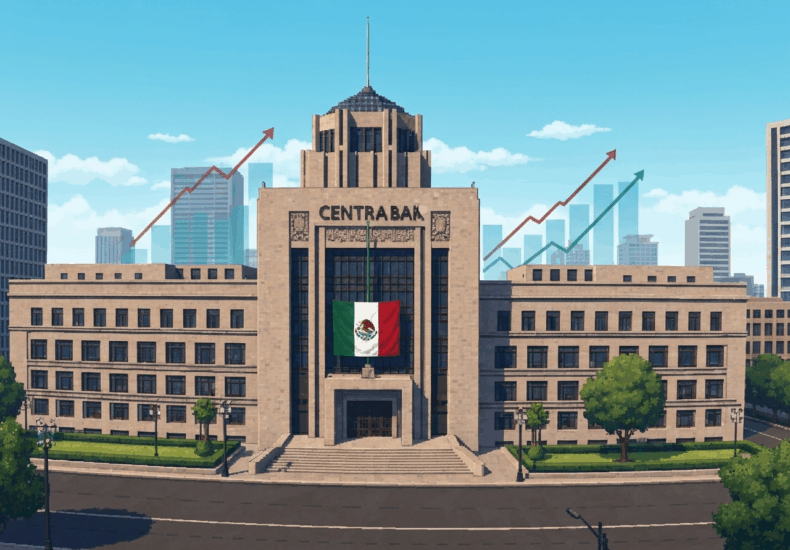
Mexico’s Central Bank Raises Growth Forecast but Warns of Sluggish Economy
Key Highlights
- Banxico raises 2025 GDP forecast from 0.1% to 0.6%.
- 2026 growth outlook increased from 0.9% to 1.1%.
- Headline inflation expected at 3.7% in Q4 2025, up from 3.3% previously.
- Core inflation revised upward to 3.7%.
- Benchmark interest rate cut to 7.75%, the lowest in three years.
- Deputy Governor Jonathan Heath warns about persistent food price inflation.
- Banxico expects inflation to converge to 3% target by Q3 2026.
Introduction
Mexico’s central bank, Banxico, has raised its 2025 economic growth forecast, reflecting stronger-than-expected performance despite global trade challenges and U.S. tariffs. However, the outlook remains cautious, as inflation pressures and sluggish domestic demand continue to weigh on Latin America’s second-largest economy.
Overview of Mexico’s Central Bank Economic Forecast Update

The Bank of Mexico (Banxico) has revised upward its economic growth forecast for 2025, signaling resilience in Latin America’s second-largest economy despite persistent challenges. In its quarterly report, Banxico increased its GDP growth estimate to 0.6% from 0.1%, citing better-than-expected performance amid global uncertainty and ongoing U.S. trade tariffs.
Growth Outlook and Inflation Pressures
Banxico Governor Victoria Rodríguez noted that Mexico’s economy “grew more than expected,” even as external risks remain. The central bank also raised its 2026 growth forecast to 1.1% from 0.9%, pointing to gradual improvement.
However, concerns over inflation persist. The bank now expects headline inflation to reach 3.7% in Q4 2025, compared to its earlier forecast of 3.3%. Core inflation, considered a more reliable measure, was also revised upward to 3.7%. Despite this, Banxico maintains that inflation should converge to its 3% target by Q3 2026.
Rate Cuts Amid Weak Growth
Earlier this month, Banxico cut its benchmark interest rate to 7.75%, the lowest in three years, in an effort to stimulate growth. While lower rates can boost economic activity, they also risk fueling higher prices. Deputy Governor Jonathan Heath, who voted against the cut, cautioned about persistent inflationary pressures, particularly in food prices.
Between Resilience and Stagnation
Analysts say Mexico’s economy is walking a fine line between resilience and stagnation. While growth is showing signs of recovery, sluggish domestic demand and global trade uncertainty weigh on the outlook. Banxico’s latest projections reflect cautious optimism: the economy is performing better than expected, but sustainable growth will depend on inflation control and external conditions, especially U.S. policy shifts.
Global Economic Conditions Influencing Mexico
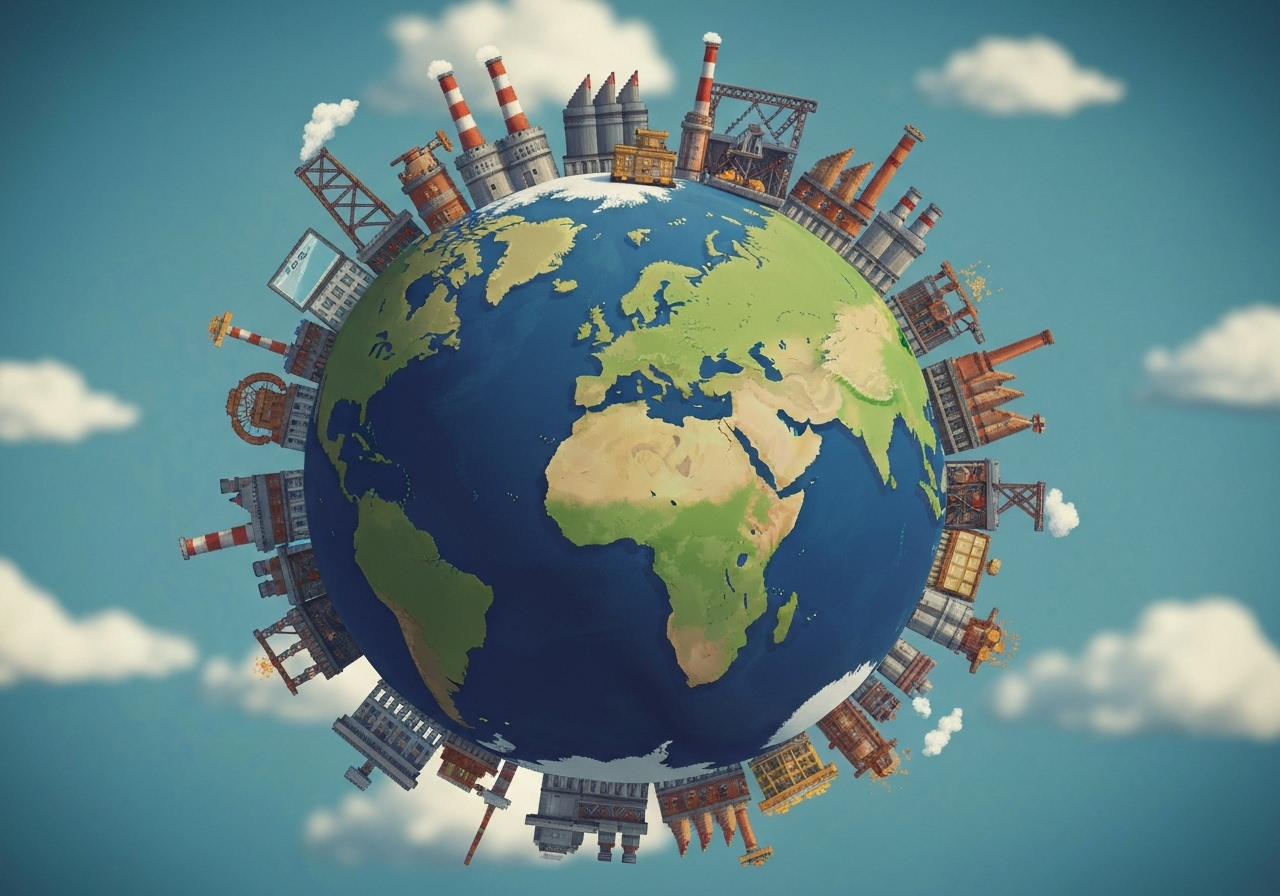
Mexico’s economy is closely linked to global trends. Changes in North America, especially in the United States, have a strong and clear effect on mexico’s economy. Trade rules, money decisions, and what customers buy in the United States all help shape how mexico’s economy works.
There are also other things at play. Changes in latin america and price swings in the world’s markets matter, too. These outside things can open new chances or bring big problems. They have an impact on mexican exports as well as prices in Mexico. The sections that follow will look more closely at how north america, latin america, and the world affect mexico’s economy.
Effects of U.S. Monetary Policy and Trade
The close economic ties between Mexico and the United States are key to keeping the Mexican economy steady. Strong demand by the United States has helped growth, especially after the pandemic started. The US-Mexico-Canada Agreement (USMCA) supports this by letting Mexico have good access to the U.S. market. It also helps to bring in foreign investment.
Decisions from the Federal Reserve in the United States about monetary policy can strongly affect Mexico. When U.S. interest rates change, it can move money, change exchange rates, and shape the whole financial setting in Mexico. If the Federal Reserve becomes more strict, it may make things tight for Mexico and its economy.
The way trade is handled, including pressure for tariffs by the White House, also matters a lot. The Mexican economy now sees a chance to build stronger ties with the United States as global supply chains change. But, to get these benefits, Mexico has to face a trade setting that can be confusing and sometimes hard to predict.
Conclusion
Mexico’s Central Bank has made an important change. The bank has raised its prediction for economic growth in 2025. This shows that there is now a more positive view about the mexican economy as things keep changing worldwide. This new forecast shows how strong the mexican economy is. It also points to how central bank policies help boost growth.
Still, there are big problems like social gaps and weak infrastructure. These issues make it hard for mexico to grow its economy all the time. Mexico will need to deal with these and use good global trends for more economic growth. If they do this, the country can stand out and have a good future. It is a good idea to keep up with news on these changes and how
Leave a Reply