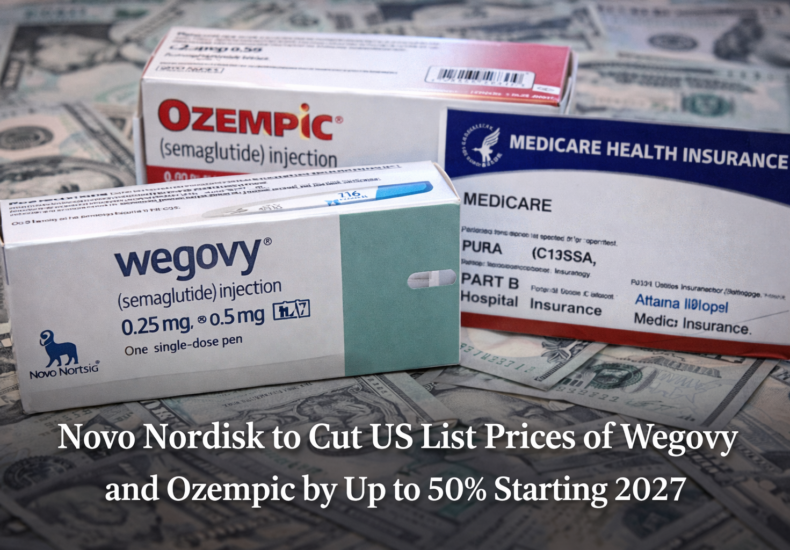
Novo Nordisk to Cut US List Prices of Wegovy and Ozempic by Up to 50% Starting 2027
Key Highlights
- Novo Nordisk will cut Wegovy’s US list price by 50% to $675 per month starting January 2027.
- Ozempic’s list price will drop by 35% under the same timeline.
- Price cuts coincide with new Medicare-negotiated pricing under the Inflation Reduction Act.
- Self-pay and direct-to-consumer prices remain unchanged.
- Competitive pressure from Eli Lilly and compounded alternatives continues to reshape the GLP-1 market.
Novo Nordisk Announces Major US Price Cuts
Novo Nordisk will significantly reduce the US list prices of its blockbuster weight-loss and diabetes drugs beginning January 1, 2027. The Danish pharmaceutical giant confirmed that Wegovy’s list price will fall by 50% to $675 per month, while Ozempic will see a 35% reduction.
The revised pricing structure aligns with upcoming Medicare-negotiated prices under the Inflation Reduction Act, marking a major shift in how GLP-1 drugs are priced in the United States.
The company will also apply price cuts to Wegovy’s pill formulation and Rybelsus, expanding the impact across its metabolic drug portfolio.
Medicare Reforms Drive Pricing Strategy
The timing of Novo Nordisk’s announcement coincides with federal Medicare pricing changes set to take effect in 2027. Under the Inflation Reduction Act, certain high-cost drugs must undergo price negotiations for Medicare beneficiaries.
Novo has already negotiated new Medicare prices for 2027. The company’s proactive list price reductions aim to support patients whose insurance plans calculate out-of-pocket costs based on official list prices.
Novo Nordisk’s US operations chief, Jamey Millar, described the new pricing as a targeted effort to assist patients tied to list-price-based cost-sharing structures.
Competitive Pressure Intensifies in GLP-1 Market
Demand for GLP-1 drugs such as Wegovy and Ozempic has surged, transforming the weight-loss and diabetes treatment market into one of the fastest-growing pharmaceutical segments globally.
However, Novo Nordisk faces mounting competition from Eli Lilly and lower-cost compounded alternatives offered by telehealth platforms like Hims & Hers. These compounded versions, often tailored in personalized doses, have gained traction amid supply constraints and pricing sensitivity.
Novo and Lilly have already expanded direct-to-consumer sales channels. Novo currently offers Wegovy through its website at approximately $349 per month, far below its official list price.
Despite the headline-grabbing reductions, analysts caution that the cuts may affect only a limited portion of prescriptions, as many consumers already purchase through discounted cash-pay channels.
Impact on Investors and Market Reaction
Following the announcement, US-listed Novo Nordisk shares fell roughly 2.6%, while Eli Lilly shares declined about 1% in morning trading.
Earlier this month, Novo warned that profits and sales could decline by up to 13% this year — its first projected contraction in years. Price adjustments may help preserve long-term market share, but near-term margin pressure remains a concern.
Analysts note that the pricing changes do not signal the start of an aggressive price war. Federal agreements with the White House effectively establish a pricing floor for several years, limiting extreme competitive discounting.
What the Price Cuts Mean for Patients
The list price reductions primarily benefit insured patients whose cost-sharing obligations link directly to list prices. The changes will not affect existing self-pay or direct-to-patient pricing models.
For Medicare beneficiaries, negotiated pricing under federal reforms will play a larger role in affordability starting in 2027.
The broader implication signals a gradual restructuring of US drug pricing mechanics, particularly for high-demand specialty medications.
Conclusion: Strategic Adjustment in a Transforming Market
Novo Nordisk’s decision to halve Wegovy’s US list price and cut Ozempic by 35% reflects a calculated response to regulatory reform and intensifying market competition.
The GLP-1 category continues to expand rapidly, but pricing dynamics are shifting as federal policy, private payers, and consumer channels reshape pharmaceutical economics.
By aligning with Medicare reforms and reinforcing access for insured patients, Novo positions itself for sustained relevance in an evolving healthcare landscape — even as competitive and margin pressures remain firmly in play.
Leave a Reply