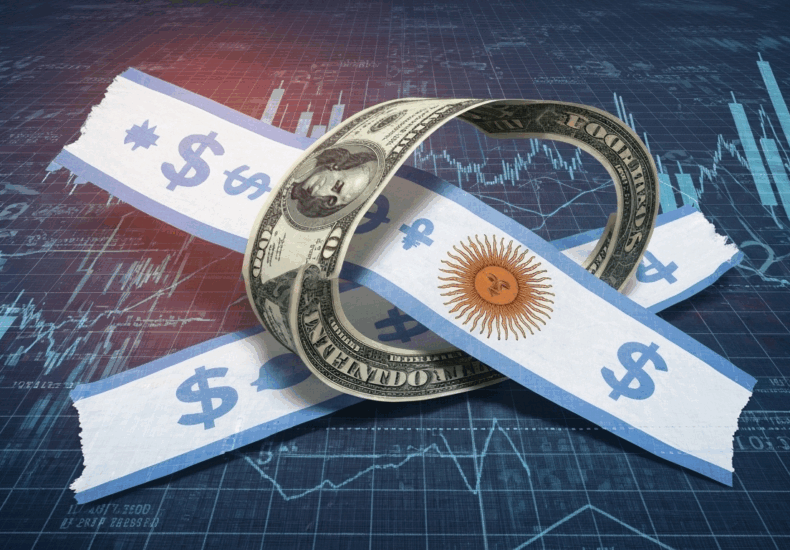
US buys Argentinian pesos: A $20 billion currency update
Key Highlights
Here are the key takeaways from the recent US-Argentina currency deal:
- The United States has purchased Argentinian pesos as part of a major financial agreement.
- This deal includes a finalized $20 billion currency swap framework to provide financial support to Argentina.
- US Treasury Secretary Scott Bessent announced the move to help stabilize Argentina’s faltering economy.
- The support aims to bolster the reform agenda of Argentina’s President, Javier Milei.
- This action comes as Argentina faces acute illiquidity and market turbulence.
- The International Monetary Fund is also unified behind Argentina’s fiscal strategy.
Introduction
In a significant financial development, the United States has stepped in to support Argentina’s struggling economy. The US Treasury Department recently announced the purchase of Argentinian pesos and the finalization of a massive $20 billion currency swap. This move is designed to provide a crucial economic lifeline to the South American nation as it navigates severe financial turbulence. What does this major currency update mean for both countries and the wider region? Let’s explore the details of this important agreement.
Overview of the US-Argentina $20 Billion Currency Swap
The core of this financial assistance is a $20 billion currency swap line established between the United States and Argentina’s central bank. But what is a currency swap? It is an agreement that allows the two countries to exchange their currencies, giving Argentina access to much-needed US dollars in exchange for its pesos. This mechanism is crucial for stabilizing financial markets during a crisis.
This deal underscores the strategic importance of Argentina’s economic health to the US. Officials have noted that the success of Argentina’s current economic reforms has “systemic importance” for the entire region. The currency swap is a direct and swift action by the US to prevent further economic decline. Below, we’ll examine the specific details of the agreement and the official statements surrounding it.
Key Details and Timeline of the Deal
The US-Argentina currency swap agreement is worth a substantial $20 billion. This financial rescue plan was finalized following four intensive days of meetings in Washington D.C. between officials from both nations. The agreement represents a direct intervention by the US to shore up Argentina’s finances.
The deal came together quickly in response to escalating economic pressure on Argentina. The timeline below highlights the key events that led to the announcement.
| Timeframe | Key Event |
|---|---|
| Late September | Argentine bond prices experienced a sharp plunge as investor confidence fell. |
| Early October | The Argentinian peso’s value dropped by more than 6% in a single day, a significant fall. |
| October 9, 2025 | The US Treasury Department, an official government organization, announced the peso purchase and the finalized $20 billion swap line. |
These rapid developments showcase the urgency of the situation. After Argentinian bond prices plunged last month and the currency crisis worsened in early October, the United States moved swiftly to provide a stabilizing force, culminating in the formal announcement of the swap line.
Announcements and Statements from the US Treasury
The official confirmation of the deal came from US Treasury Secretary Scott Bessent, who made the announcement through a social media post. Key officials involved in cementing the agreement included Bessent and his Argentine counterpart, Economy Minister Luis Caputo. Their discussions were critical to finalizing the terms of the financial support.
In his announcement, Bessent highlighted the critical need for immediate action. He stated, “Argentina faces a moment of acute illiquidity. The international community – including [the International Monetary Fund] – is unified behind Argentina and its prudent fiscal strategy, but only the United States can act swiftly. And act we will.” This statement emphasizes the unique position of the US to provide rapid assistance.
Argentine President Javier Milei, a close political ally of US President Donald Trump, expressed his gratitude for the support. Following the announcement, Milei thanked both Trump and Bessent, saying, “Together, as the closest of allies, we will make a hemisphere of economic freedom and prosperity.” Minister Caputo also shared his “deepest gratitude,” underscoring the collaborative nature of the deal.
Objectives and Motivations Behind the US Buying Argentinian Pesos
So, why did the US decide to buy Argentinian pesos and extend such significant support? The primary motivation is to ensure the success of Argentina’s current economic reform agenda, which the US sees as critically important. The administration believes that a stable and economically sound Argentina is beneficial for the entire hemisphere.
This move is rooted in the strategic interest of the United States. A Treasury official stated that “A strong, stable Argentina which helps anchor a prosperous Western Hemisphere is in the strategic interest of the United States.” This perspective frames the currency swap not just as a rescue for one nation but as an investment in regional stability. The following sections will explore the specific goals and the reasons Argentina needed this help.
Economic Strategies and US Treasury Goals
The main goal of the US Treasury in this initiative is to support Argentina’s prudent fiscal strategy and prevent a deeper economic crisis. US Treasury Secretary Scott Bessent has been clear that this support is vital for regional stability. The aim is to provide Argentina with the necessary tools to manage its currency and restore confidence in its financial markets.
To achieve this, the Treasury Department is prepared to use its Exchange Stabilization Fund, a pool of money that can be used to intervene in currency markets. While this has sparked some debate, Bessent has defended the action, warning that doing nothing could risk turning Argentina into a “failed state,” which would have far-reaching negative consequences.
Ultimately, the overarching strategy is to foster a prosperous Western Hemisphere. The US administration believes that helping its ally succeed contributes to this larger objective. The financial support is viewed as a proactive measure to ensure Argentina’s reform agenda does not collapse under market pressure, thereby strengthening the economic foundation of the entire region.
Why Argentina Needed a Currency Swap Agreement
Argentina was at a critical juncture, facing what officials described as a “moment of acute illiquidity.” The country’s central bank was rapidly burning through its foreign currency reserves in an attempt to defend the falling peso. Without access to more US dollars, Argentina’s financial stability was at serious risk, impacting everything from debt payments to public confidence.
The country was grappling with several severe economic challenges simultaneously:
- Its central bank was rapidly losing its foreign currency reserves.
- Argentine bond prices plunged sharply at the end of September.
- The peso’s value plummeted, forcing the government to sell dollars to support it.
- President Milei’s austerity measures, while praised by some, faced growing public backlash.
- Upcoming midterm elections on October 26 added a layer of political uncertainty for investors.
The US buying Argentinian pesos and establishing the swap line has had an immediate, positive impact on Argentina’s economy. The financial support acted as a crucial “lifeline,” causing Argentina’s dollar-denominated bonds to rise and its stock market to surge. This has bought President Milei valuable time to continue with his reform agenda, although analysts caution that it is a temporary reprieve, not a permanent solution.
Conclusion
In summary, the recent $20 billion currency swap agreement between the US and Argentina marks a significant milestone in international finance. This strategic move not only provides Argentina with much-needed support but also aligns with the US Treasury’s broader economic objectives. By understanding the implications of this currency update, both nations can better navigate the complexities of global markets. It’s essential to stay informed about such agreements, as they can impact economic stability and trade relations. If you have questions or would like to discuss the effects of this deal further, feel free to reach out for a consultation!
Leave a Reply